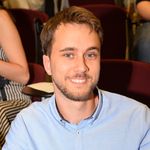
About Me
I am currently a Postdoctoral Researcher in the Human-Centered Computer Vision (HCCV) group, led by Prof. Antonis Argyros, at the Institute of Computer Science, FORTH. I also serve as an Adjunct Lecturer at Hellenic Mediterranean University.
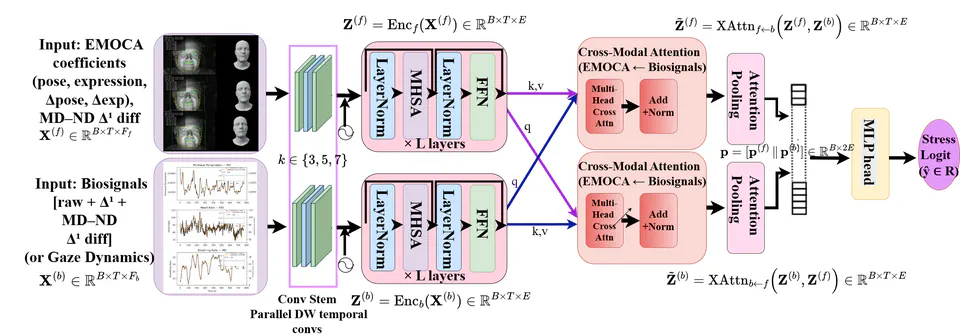
My research interests include artificial neural networks, stress estimation, human pose and body-part estimation, and vision-based human–computer interaction.
- Artificial Intelligence
- Computational Vision
- Affective Computing
- Vision-based Human-Computer Interaction
-
Ph.D. in Computer Science
Computer Science Department, University of Crete
-
M.Sc. in Computer Science and Computer Engineering
Computer Science Department, University of Crete
-
Computer Science Degree
Computer Science Department, University of Crete
Experience
-
Adjunct Lecturer
Department of Management Science & Technology, Hellenic Mediterranean UniversityTeaching the course of Expert Systems -
Postdoctoral Researcher
HCCV Group at ICS - FORTHDevelopment of a Computer vision project for measurement and analysis of human-object interaction -
Computer systems designer, analyst and programmer
HCCV Group at ICS - FORTHDevelopment and maintenance of computer vision applications in the human motion tracking system (MOCAP) -
Additional research staff with a profession in the Research Services in Informatics
University of CreteEvaluation and optimization of optical systems for smart, visual inspection of processes and evaluation of protocols based on visual information, which are used in a work and industrial environment. Contribution to the work unit EE4, aiming at the evaluation and optimization of the optical systems developed by the University of Crete, in the digital platform for dissemination of results, and in the actions for the sustainability of the network of excellence. -
Graduate Research Assistant (Ph.D. student position)
HCCV Group at ICS - FORTH- Research and study the domain of Artificial Neural Networks and its applications in order to optimize their performance, by using probabilistic models and representation learning
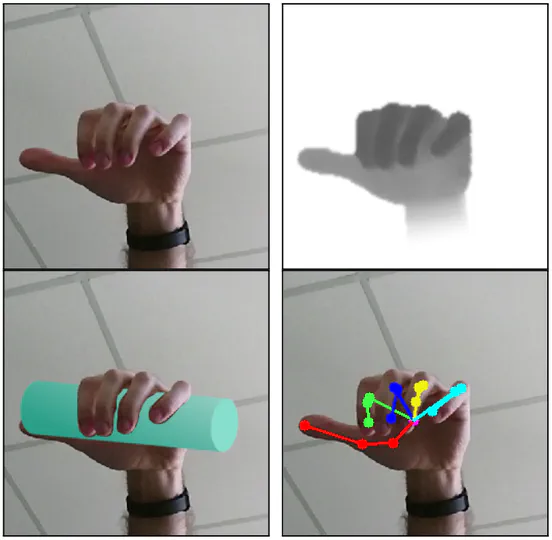
- Study, investigate and analyze aspects of human hands, such as depth from color reconstruction and pose estimation with the use of Artificial Neural Networks
- Contribution to projects of the Computer Vision and Robotics Laboratory: Co4Robots, HealthSign, SignGuide, I.C.Human, ACTYS
-
Teaching Assistant
University of CreteFor the following courses: CS-110 Calculus I, CS-111 Calculus II, CS-118 Discrete Mathematics, CS-150 Programming, CS-225 Computer Organization, CS-240 Data Structures, CS-672 Advanced Topics in Computational Vision. -
Graduate Research Assistant (M.Sc. student position)
HCCV Group at ICS - FORTH- Design, implementation and experimental evaluation of methods that focus on 3D hand pose estimation with with the use of Radial Basis Function Networks
- Contribution to projects of the Computer Vision and Robotics Laboratory: Co4Robots
-
Undergraduate Research Assistant
HCCV Group at ICS - FORTH- Design and implementation of a virtual touch operated surface, using 3D hand tracking
- Introduction to research and the field of Computer Vision
I have participated and contributed in the following projects:
- CARAML: 2025 - Present
- Greece4.0: 2024 - 2025
- I.C.Humans: 2023 - 2025
- ACTYS: 2022 - 2024
Education
-
Ph.D. in Computer Science
Computer Science Department, University of CreteRead ThesisDuring my studies I recieved a scholarship by the Hellenic Foundation for Research and Innovation (HFRI) under the HFRI Ph.D. Fellowship grant (Fellowship Number: 803). The research of this dissertation was also supported by the VMware University Research Fund (VMURF).
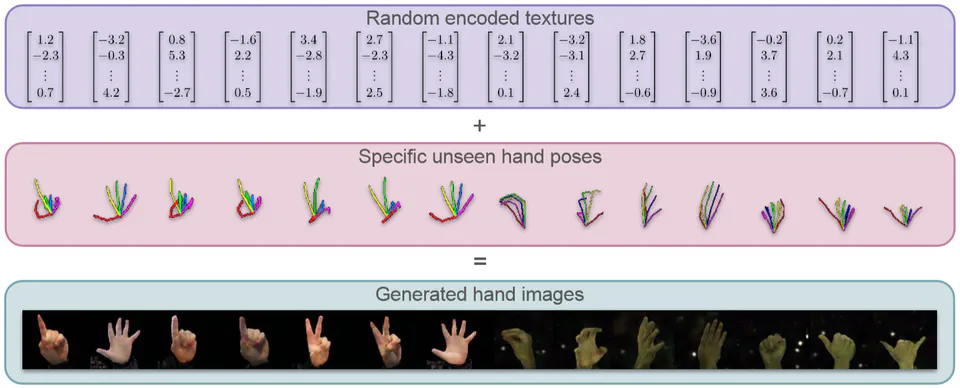
The topic of my dissertation was Multi-Domain Inference and Generative Modeling for Hand Image Synthesis. Supervised by Prof Antonis Argyros.
-
M.Sc. in Computer Science and Computer Engineering
Computer Science Department, University of CreteRead ThesisSpecialized on:
- Cognitive and Computational Vision and Robotics,
- Algorithms and System Analysis
Thesis on Single Shot 3D Hand Pose Estimation Using Radial Basis Function Networks Trained on Synthetic Data. Supervised by Prof Antonis Argyros.
-
Computer Science Degree
Computer Science Department, University of Crete
Feel free to e-mail me.
| Address: | Institute of Computer Science, Foundation for Research and Technology - Hellas N. Plastira 100, Vassilika Vouton, GR-700 13 Heraklion, Crete, Greece |
| Building: | AMI facilities |
| Office: | 2.16 |
| Phone: | +30 2811 392540 |